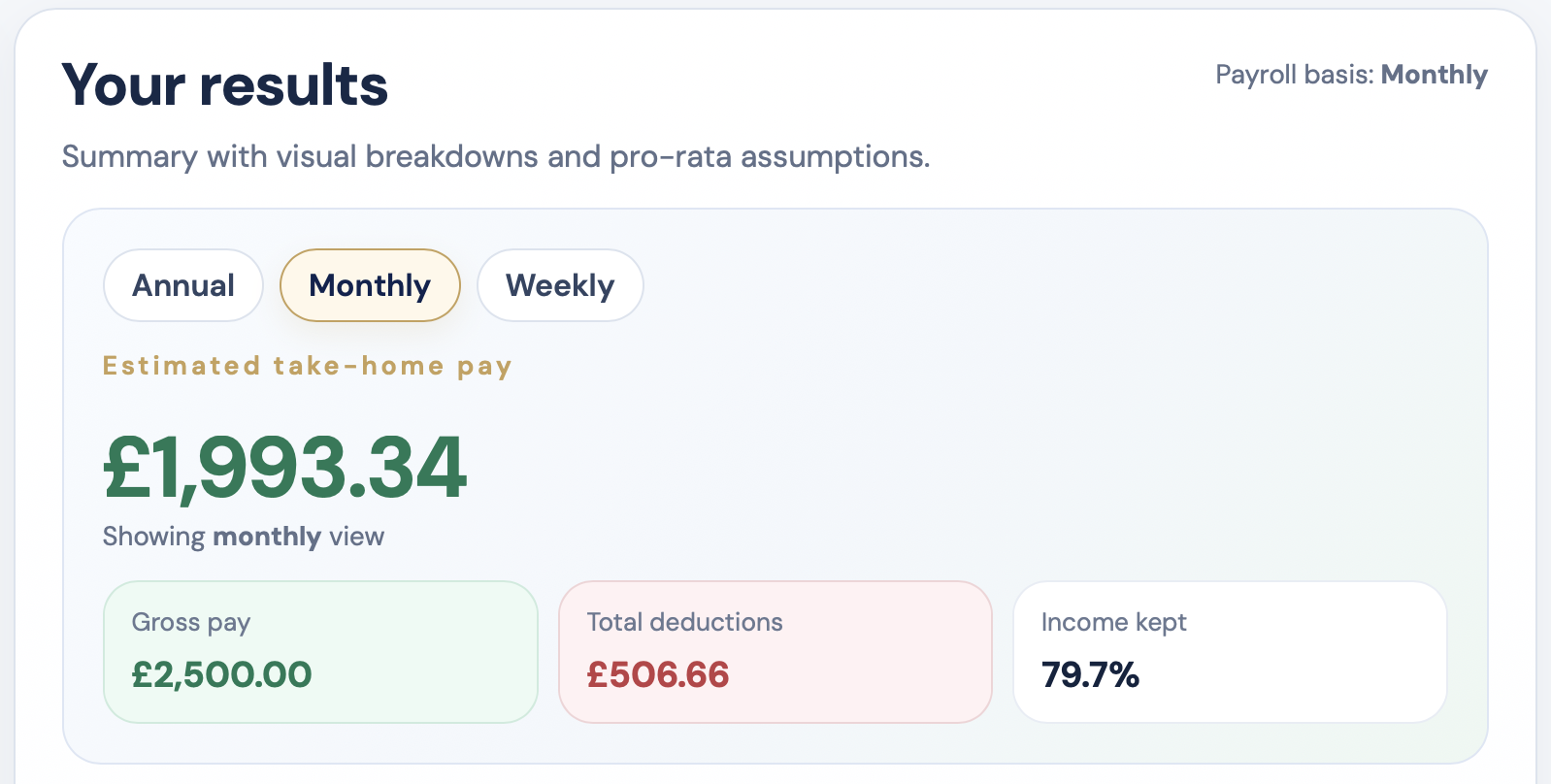
£30,000 salary take home UK (2026): for most employees on a standard tax code in England, Wales or Northern Ireland, a £30,000 salary gives a monthly take-home pay of roughly £1,993 to £2,093 per month, depending on pension contributions, student loans and other deductions.
This means:
- Estimated annual take-home: £23,920 to £25,120
- Estimated monthly take-home: £1,993 to £2,093
- Estimated weekly take-home: £460 to £483
Your exact figure can vary depending on your tax code, pension setup, student loan plan, benefits in kind, salary sacrifice deductions and whether you live in Scotland.
For a personalised breakdown, use our take home pay calculator.
£30,000 take-home pay UK (2026 summary)
- Gross salary: £30,000
- Estimated net annual pay: £23,920 to £25,120
- Estimated net monthly pay: £1,993 to £2,093
- Estimated net weekly pay: £460 to £483
What does £30,000 salary mean after tax in the UK?
A gross salary of £30,000 means you earn £30,000 per year before deductions. From that amount, your employer may deduct:
- Income Tax
- Employee National Insurance
- Workplace pension contributions
- Student loan repayments (if applicable)
- Salary sacrifice deductions
For most employees, Income Tax and National Insurance make up the largest deductions.
Typical £30,000 take-home pay in 2026
For a standard PAYE employee with no unusual adjustments, the take-home pay typically falls within this range:
- Gross annual salary: £30,000
- Estimated annual take-home: £23,920 to £25,120
- Estimated monthly take-home: £1,993 to £2,093
- Estimated weekly take-home: £460 to £483
This is a guide rather than an exact figure. Even small differences in setup can change your net pay.
Example breakdown for £30,000 salary
A typical employee may see deductions such as:
- Income Tax: charged on earnings above the Personal Allowance
- National Insurance: applied to qualifying earnings
- Pension: often 3% to 5% employee contribution
If you do not contribute to a pension or repay a student loan, your take-home pay will usually be higher than someone who does.
Why your £30,000 take-home pay might be different
1. Tax code
Your tax code determines how much of your income is tax-free. Non-standard codes can increase or reduce take-home pay.
2. Pension contributions
Workplace pension contributions reduce your net pay, depending on the scheme type (relief at source, net pay or salary sacrifice).
3. Student loan plan
Different plans have different thresholds, meaning repayments can vary significantly at this salary level.
You can estimate this using our student loan repayment calculator.
4. Scotland vs rest of UK
Scottish income tax bands differ, so take-home pay may not be identical across the UK.
5. Salary sacrifice
Salary sacrifice can reduce your taxable income, lowering tax and NI but also changing your take-home figure.
Try our salary sacrifice calculator to see the impact.
£30,000 monthly budgeting example
Using a monthly take-home of roughly £1,993 to £2,093, you can build a realistic budget.
This might include:
- Housing costs (rent or mortgage)
- Council tax and utilities
- Food and essentials
- Travel and commuting
- Savings and emergency fund
- Debt repayments
- Discretionary spending
Using your net income rather than gross salary gives a much clearer view of affordability.
£30,000 vs £35,000 salary UK
Increasing your salary from £30,000 to £35,000 can significantly increase your monthly take-home pay and disposable income.
Compare different salary levels using our salary comparison calculator.
How to get an exact £30,000 take-home figure
The most accurate way to check your pay is to use your own details.
Use our Take Home Pay Calculator UK to calculate your exact net pay based on your situation.
Is £30,000 a good salary in the UK?
Whether £30,000 is a good salary depends on location and lifestyle.
- More comfortable in lower-cost areas
- Can feel tight in high-cost cities
- Often considered a mid-level early career salary
The key factor is how much reaches your bank account each month after deductions.
What should you do next?
If you're earning £30,000, you may want to:
- Check how pension contributions affect your pay
- Estimate student loan repayments if applicable
- Compare your salary with higher income levels
Useful tools:
Summary
A £30,000 salary in the UK in 2026 typically results in around £1,993 to £2,093 per month after tax and National Insurance.
Your exact take-home depends on pension contributions, student loans and tax setup. For a precise figure, use a calculator that reflects your personal situation.